Short-Session Games: Where the Two-Minute Round Comes From

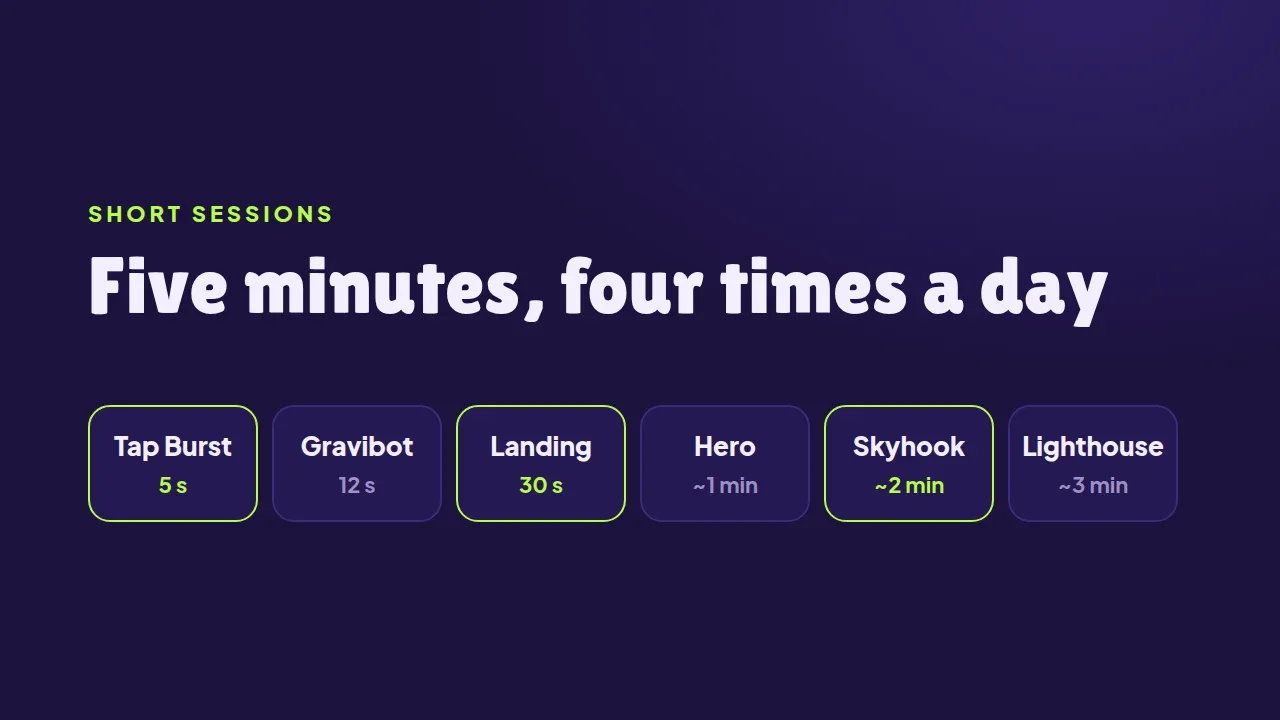
The analytics company GameAnalytics publishes benchmarks drawn from thousands of mobile games. Its 2025 report, built on 2024 data from 11,600 games in 16 genres, puts the median play session at 5 to 6 minutes, with the top quarter of games averaging 8 to 9 minutes, and the average player opening a game about four times a day.
Five minutes, four times a day. That is the shape of most real play on a phone, and it explains why a good short-session game is not a long game cut into pieces. It is built around rounds small enough that several of them fit into one of those five-minute gaps.
Where short rounds come from
Short rounds are older than phones. Arcade cabinets earned their money one play at a time, so a game that ended quickly and invited another try was doing its job. Home consoles and computers loosened that pressure and made room for games that last for hours. Phones brought the short round back, because the phone is in the pocket during exactly the moments the arcade was built for: a wait, a queue, a break.
How long a round is on SalutGames
| Game | One round | Source |
|---|---|---|
| Tap Burst | 5, 10 or 30 s | Race lengths in the game |
| Gravibot | par 12 to 25 s per room | The solver's par times |
| Last-Second Landing | 27 to 32 s to the runway | Mission settings |
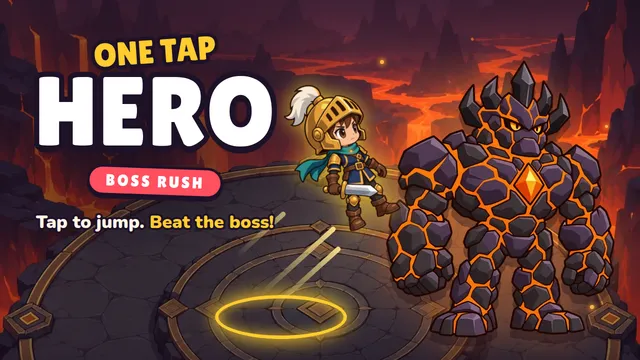
| One Tap Hero | 36 to 76 s per fight | The game's balance simulator |
| Lost Corridors | 16 to 131 s of light per maze | Starting light, one point per second |
| Skyhook | about 2 minutes per climb | The game page |
| Lightkeeper | about 3 minutes per night | The game page |
Most rounds sit well under the five-minute median, which leaves room for the most important part of a short session: the second try. A round of 30 seconds that ends in a near miss is followed by another one almost immediately, and that is where most of the session's play happens.
What a game needs for five-minute play
A round being short isn't enough on its own. The games on SalutGames share a handful of habits, visible in their code, that make a five-minute session work:
- No save button. Every game writes its own save as progress is made, so closing the tab costs nothing.
- Pause on leaving. Every game notices when its tab is hidden, and the action ones pause straight away. A session interrupted by a message is a session that can resume.
- Teaching in one line. In most of the games, new ideas arrive as a single short tip, shown once, the first time the idea appears, rather than as a tutorial that eats half the session.
- A clear end to every round. A room, a lab, a night, a race. The player always knows whether there's time for one more.
The five-minute test
A practical way to judge any short-session game is to give it exactly five minutes and count how many complete rounds fit. In Tap Burst, a whole world's worth of five-second Sprint races fits easily. In Gravibot, a sector of four rooms usually fits. In Lightkeeper, roughly one night and the start of the next. All three end the five minutes at a natural stopping point, and that, more than any single round length, is what makes a game fit the way phones are really used.

Sources
- Game Dev Reports, GameAnalytics: Mobile gaming benchmarks in 2025, 17 February 2025
- SalutGames: game source code, the One Tap Hero balance simulator and the game pages