Two Players, One Screen: Pass-and-Play Games Explained

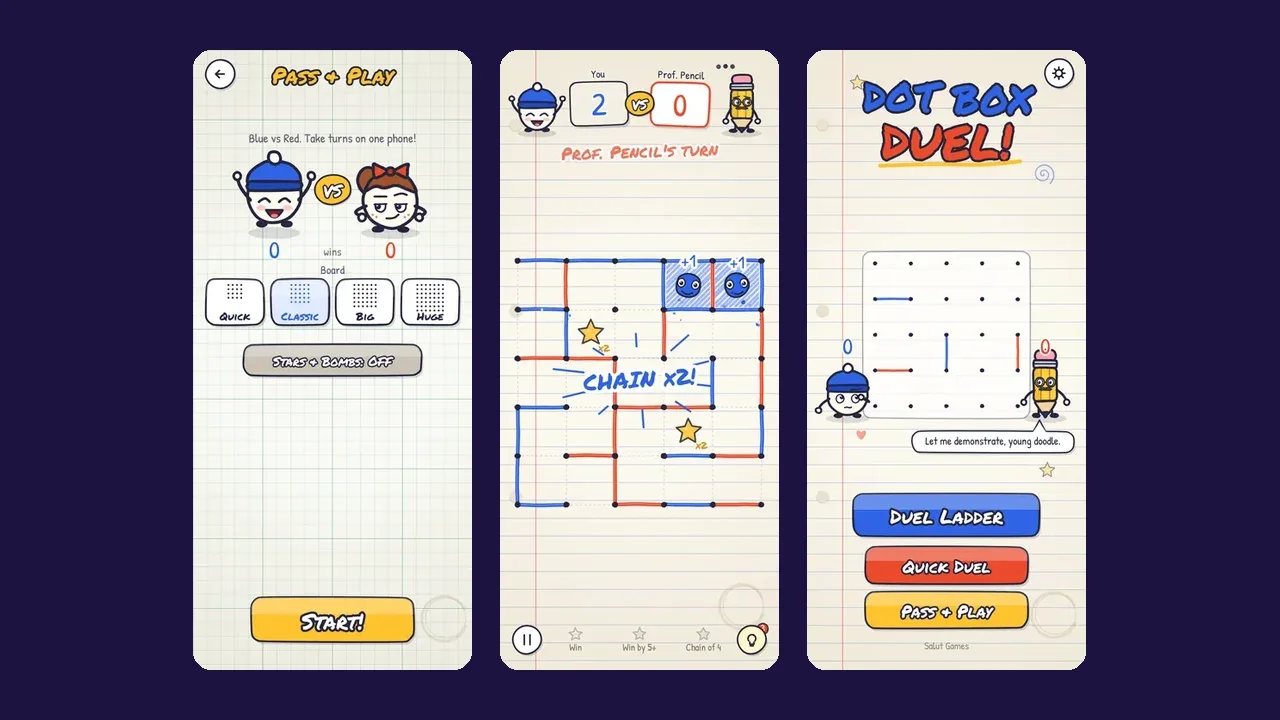
Dots and Boxes was first published in the 19th century by the French mathematician Édouard Lucas, who called it la pipopipette. It needs one sheet of paper, one pen and two people taking turns. Long before phones, that was already pass-and-play: a single game board, handed back and forth across a table.
Video games have a name for the same idea. Wikipedia describes hotseat, also called pass-and-play, as a multiplayer mode that "allows two or more players to play on the same device", and notes that it dates back to early-1980s arcade games and is usually turn-based by nature.
What makes a game work this way
Not every game survives being passed around. The ones that do tend to share four traits:
- Turns, not reflexes. Each player acts, then waits. Nobody needs the screen at the same moment.
- Nothing hidden. Everything that matters is on the board, so passing the phone doesn't reveal a secret.
- Short turns. A turn that lasts seconds keeps the person waiting involved.
- An obvious owner of the turn. Colour, a name or a banner makes it impossible to play out of turn.
Dots and Boxes meets all four, and adds one more ingredient that makes it especially good for two people in the same room: closing a box earns another turn. A single move can turn into a run of five boxes while the other player watches.
Pass and Play in Dot Box Duel
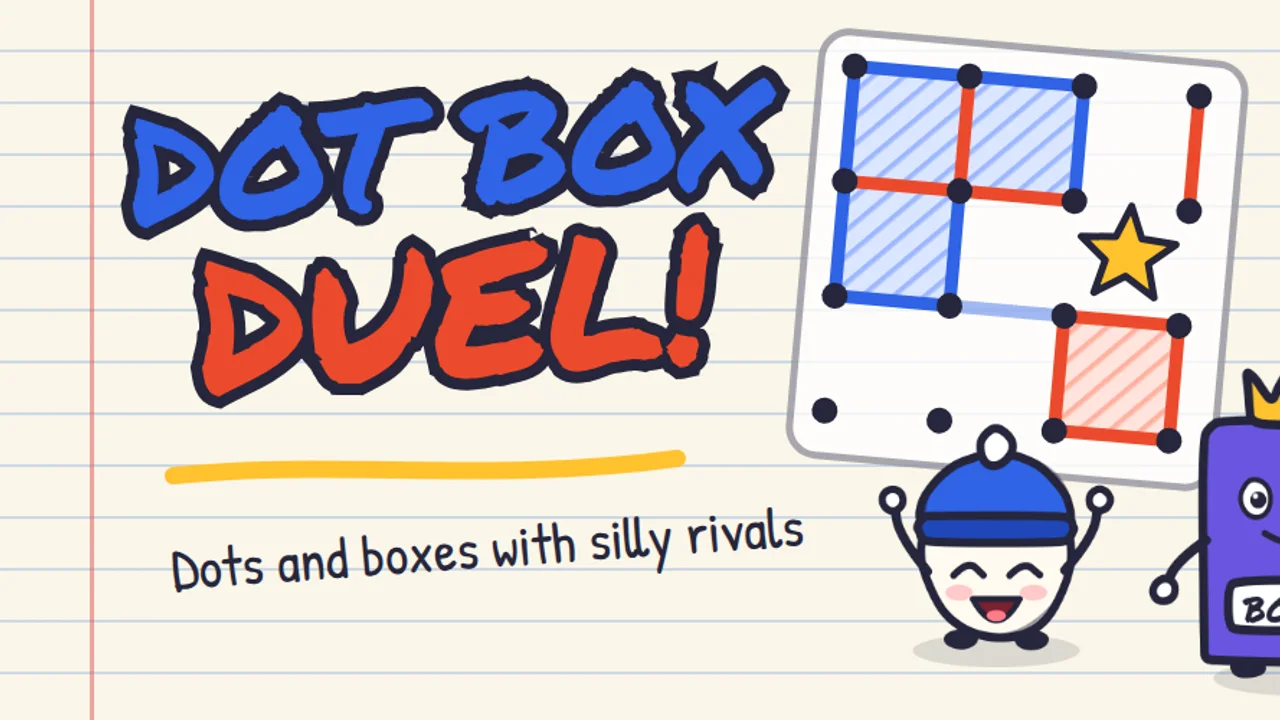
Dot Box Duel has a mode built for exactly this: Blue against Red, taking turns on one phone. It offers four board sizes:
| Board | Boxes | Lines | Twists |
|---|---|---|---|
| Quick | 3 × 3 | 24 | 1 and 1 |
| Classic | 4 × 4 | 40 | 1 and 1 |
| Big | 5 × 5 | 60 | 2 and 2 |
| Huge | 6 × 6 | 84 | 3 and 2 |
Lines is the number of lines to draw on that board. The twists column only applies when stars and bombs are switched on: about one star box, worth two points, for every 12 boxes, and one bomb box, which ends the turn of whoever closes it, for every 16. The twists are placed at random each game, so the same board size never plays out the same way twice.
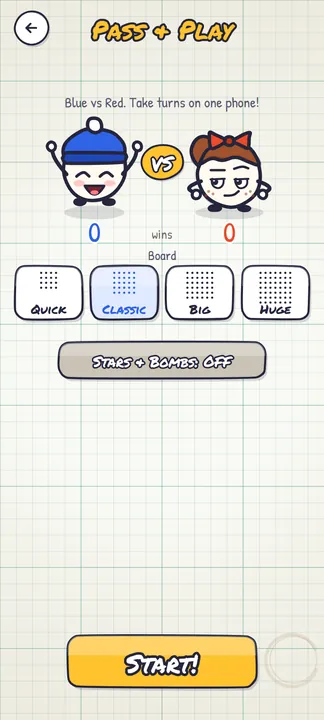
Quick suits a game in a minute or two. Huge, with 84 lines, is where the endgame strategy from the solo ladder starts to matter, because long chains form and the player who opens the first one usually loses.
Turning solo games into a challenge
The other SalutGames games are single-player, but several of them make good take-turns contests, because their levels are identical for everyone:
- Tap Burst's Free Test. Ten seconds each, and the rank names the result. Two people, one phone, an instant winner.
- Gravity Lab. Every lab has a par set by a solver, and the move counter is on screen. Same lab, one attempt each, fewest turns wins.
- Silent Maze. Each level is built from a fixed seed, so it's the same maze on every phone. Fewest bell rings to escape wins.
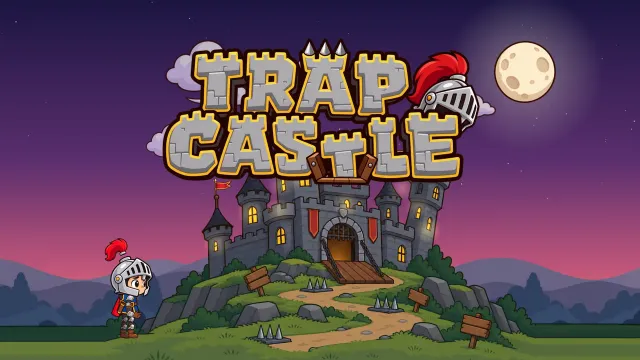
- Trap Castle. The skull counter shows deaths per room. Fewest skulls through a room wins.
Those contests work for the same reason Dots and Boxes does. Everyone faces the same board, every move is visible, and the result is a number nobody can argue with.
Sources
- Dots and boxes, Wikipedia
- Hotseat (multiplayer mode), Wikipedia
- SalutGames: Dot Box Duel's source code