Puzzle Platformer Games Explained: Why the Genre Keeps Coming Back

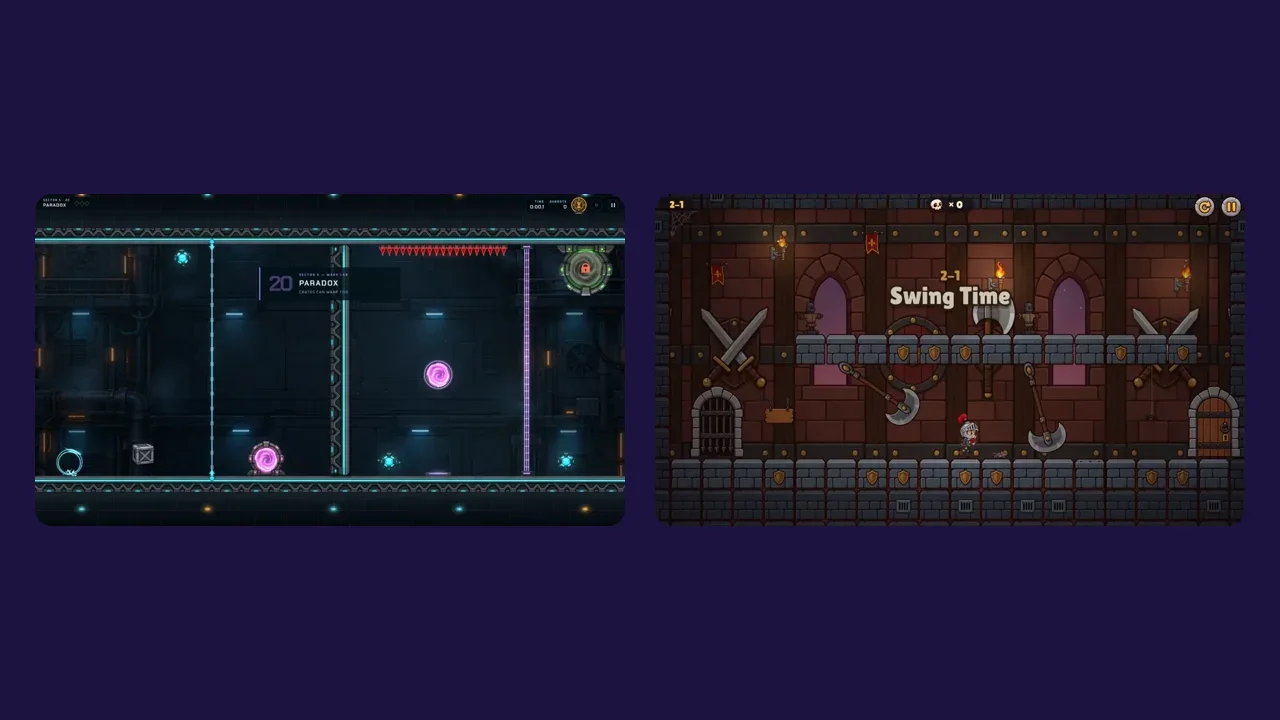
A puzzle platformer looks like any other platform game: a character, some floors, gaps, hazards and an exit. The difference is where the difficulty comes from. Wikipedia's definition is that these are games built on a platformer structure "whose challenge is derived primarily from puzzles". It names Enix's Door Door from 1983 and Sega's Doki Doki Penguin Land from 1985 as perhaps the first, and notes that independent developers have given the genre a long revival. Braid, which builds its puzzles out of rewinding time, is one of the best known.
In a pure platformer the question is whether the jump can be made. In a puzzle platformer the question is which jump, in which order, and what has to be moved first.
The genre's oldest problem
Puzzles bring a risk that pure action games mostly avoid: a level that can't be solved at all. A crate lands one pixel short, a laser pulses a fraction too fast, a door needs a key that falls somewhere unreachable. A designer playing the level a hundred times can still miss the one arrangement that breaks it, because the designer always knows the intended route.
The standard answer is to stop relying on the designer and let a program play every level. Each puzzle game on SalutGames does this in its own way.
| Game | Tested by | Guarantee |
|---|---|---|
| Gravibot | A search over the real game physics | A stored route for all 28 rooms |
| Trap Castle | 32 scripted playthroughs, one per room | Every room can be beaten |
| Gravity Lab | A solver that tries every sequence of turns | The fewest moves for all 60 labs |
| Lost Corridors | Two test bots per maze | Enough light to escape, and to collect every gem |
How each one works
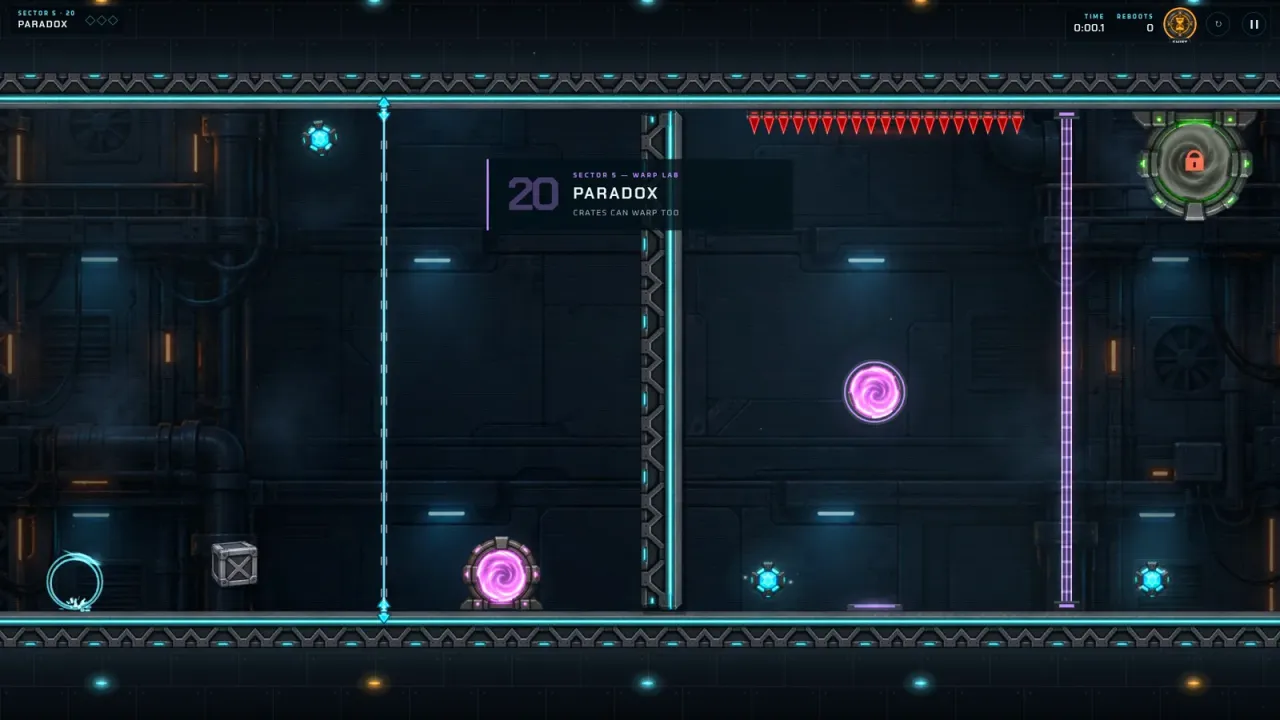
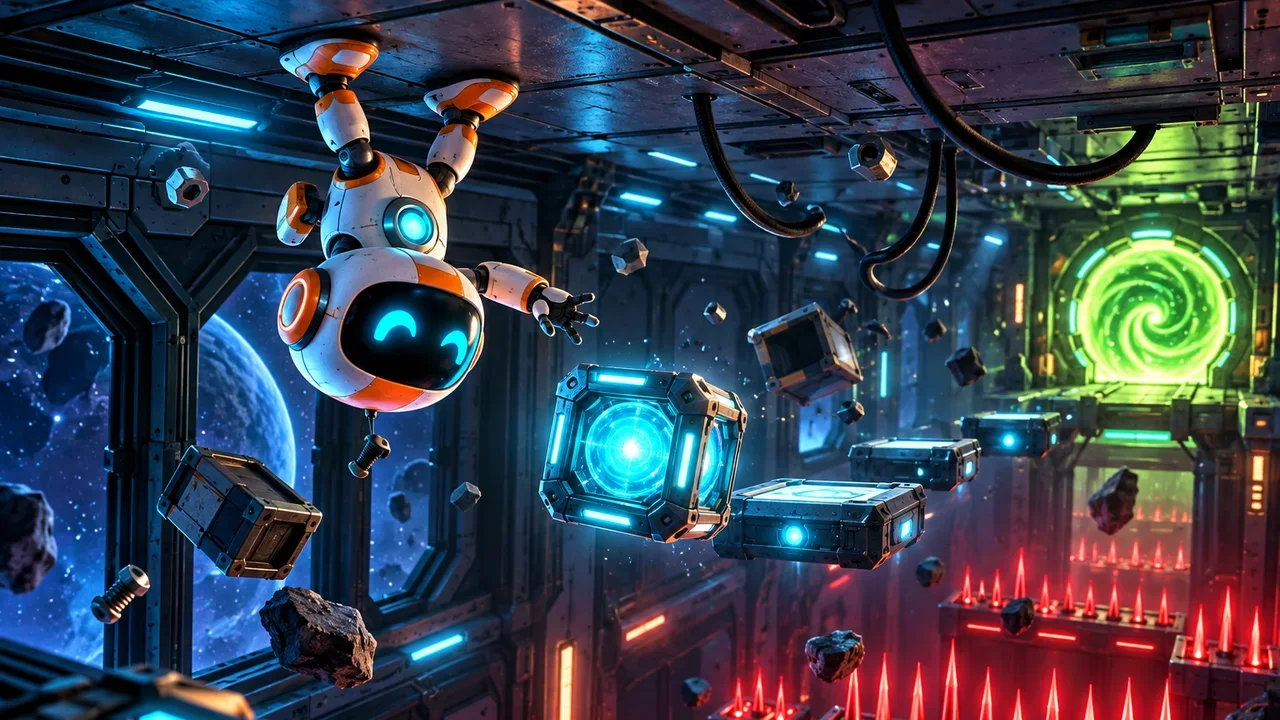
Gravibot runs a weighted A* search, a method that always explores the most promising position next, over the same physics code the game uses. Every 0.05 seconds of game time it chooses a direction and whether to flip. Because the physics are deterministic, the route it finds is a real sequence of inputs, and replaying all 28 stored routes takes a fraction of a second, which makes it easy to check that no room broke after a change.
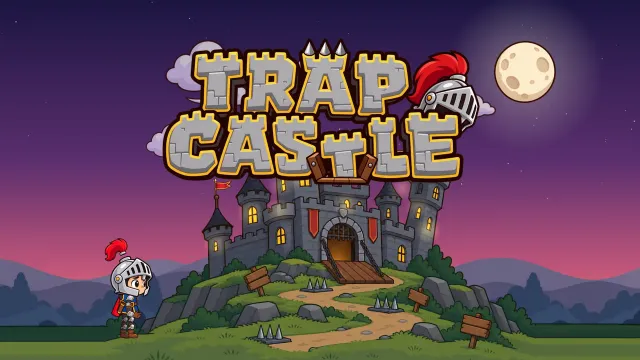
Trap Castle stores a script for every one of its 32 trap rooms, written in commands such as "walk to here", "jump right and hold" and "wait", and a test plays them all and reports any room that wasn't beaten. Its first boss has an extra test of its own: a knight standing completely still at the entrance, run to make sure the Jailer can never defeat himself by walking onto the cracked floor.
Gravity Lab can afford a complete search, because its puzzles are turn-based and each lab has only two possible moves per turn. Its solver finds the shortest possible solution for every lab, and that number becomes par. The same solver powers the hint button, running live from the position on screen.
Lost Corridors tests a different kind of puzzle, a light budget. Two bots play each maze: one heads straight for the exit and has to escape 9 times out of 10, and the other collects every gem and has to earn three stars 7 times out of 10. The starting light for each maze was set from those results.
What players get out of it
Machine testing changes a player's experience in two ways. The first is trust: in a room that feels impossible, the feeling is wrong, and it can be checked. Gravibot's ghost guide replays the solver's own route on request after three failed attempts, and Gravity Lab's hint shows the next move of the shortest solution.
The second is fair targets. A par time or a par move count that comes from a solver is a real number, not a guess. Gravibot sets par at double the solver's time plus four seconds, generous for a person, while Gravity Lab sets par at the solver's exact minimum, which makes its three-star rating a genuine puzzle of its own.
Sources
- Puzzle-platform game, Wikipedia
- SalutGames: the solvers and test scripts of Gravibot, Trap Castle, Gravity Lab and Lost Corridors