WebGPU and WebAssembly: What New Browser Tech Means for Games in 2026

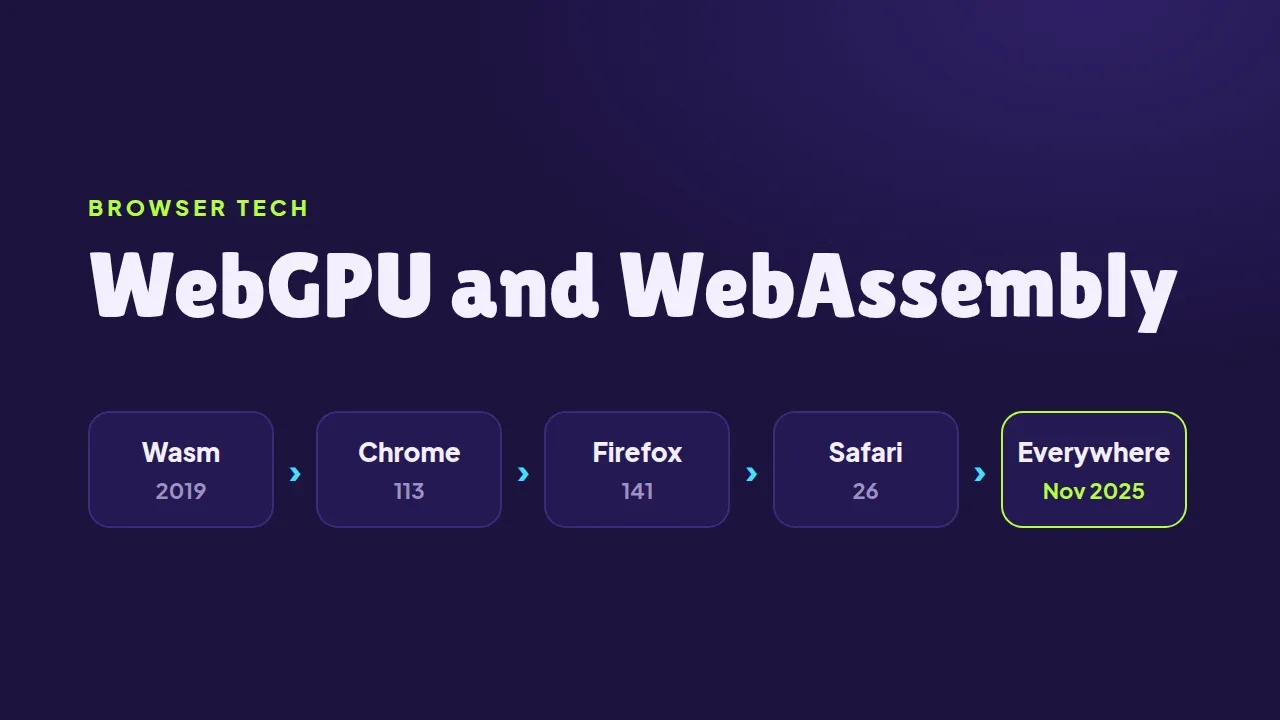
On 25 November 2025, Google's web.dev announced that WebGPU "is officially supported across Chrome, Edge, Firefox, and Safari". Six years earlier, on 5 December 2019, the W3C had made WebAssembly an official web standard and called it "the fourth language for the Web", next to HTML, CSS and JavaScript. Between them, these two technologies change what a browser tab can run. They also raise a question every browser game has to answer: does it need them?
What each one does
WebGPU gives a web page direct, modern access to the graphics card. In Chrome's own description, it allows "high-performance 3D graphics and data-parallel computation on the web". The second half matters as much as the first: besides drawing, the graphics card can be used for heavy number crunching, such as physics or thousands of particles at once. web.dev calls it "not just a replacement for WebGL" but "a massive leap forward".
WebAssembly lets code written in other languages run in the browser at close to native speed. The W3C's announcement describes it as enabling "near-native performance" and as "a compilation target for existing code bases". In practice, that is how large game engines written in languages like C++ are brought to the web.
How long it took to arrive everywhere
| When | What changed |
|---|---|
| December 2019 | WebAssembly becomes a W3C Recommendation |
| 2023 | Chrome and Edge 113 ship WebGPU on Windows, macOS and ChromeOS |
| Chrome 121 | WebGPU on Android 12 and later, with Qualcomm or ARM graphics |
| Firefox 141 | WebGPU on Windows, in July 2025 |
| Safari 26 | WebGPU on macOS, iOS, iPadOS and visionOS 26 |
| Firefox 145 | WebGPU on macOS Tahoe on Apple silicon |
| November 2025 | Supported across all four major browsers |
The Android line is the one to read twice. WebGPU on Android needs a recent version of the system and particular graphics chips, which leaves out older phones and some cheaper ones.
What it means for games
For big games, the change is real. A 3D game with complex lighting, a physics simulation with thousands of objects, or an existing engine compiled to WebAssembly can now run in a tab in a way that was impractical a few years ago.
It comes with a cost that has nothing to do with speed once the game is running. A whole engine compiled to WebAssembly has to be downloaded and compiled before the first frame can appear, and a game that depends on WebGPU has to decide what to show on devices that don't support it.
What the SalutGames games use
The live files of all thirteen games were checked for this post. Every one of them draws with Canvas 2D, the plain drawing surface browsers have supported for well over a decade. None uses WebGL, WebGPU or WebAssembly, and none is built on a game engine library.
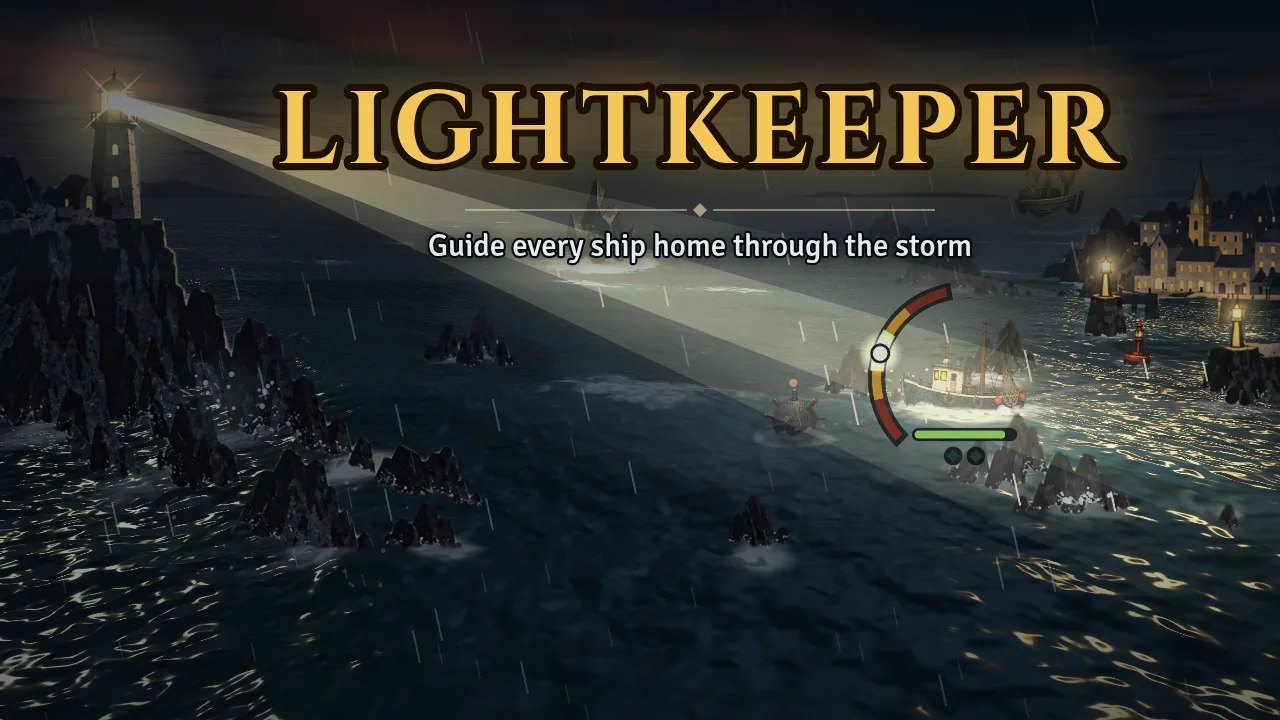
That is a deliberate fit, not a gap. The games are 2D, with a modest number of moving objects on screen, and Canvas 2D handles that comfortably on almost any device. Lightkeeper's rain, drawn faint everywhere and bright where it falls through the lamp's beam, and Silent Maze's echo, which lights walls and fades them to a remembered outline, are both drawn this way. The payoff shows up in the speed test: ten of the thirteen games download less than 2.1 MB, and the median game puts its first frame on screen in 0.77 seconds.
New technology earns its place when a game needs what it offers. For a large 3D world, WebGPU and WebAssembly are now the right tools on the web. For a two-minute 2D game meant to start instantly on any phone, Canvas 2D is still the better fit.
Sources
- web.dev, WebGPU is now supported in major browsers, 25 November 2025
- Chrome for Developers, Chrome ships WebGPU
- W3C, World Wide Web Consortium (W3C) brings a new language to the Web as WebAssembly becomes a W3C Recommendation, 5 December 2019
- SalutGames: the live files of all 13 games, checked in October 2026