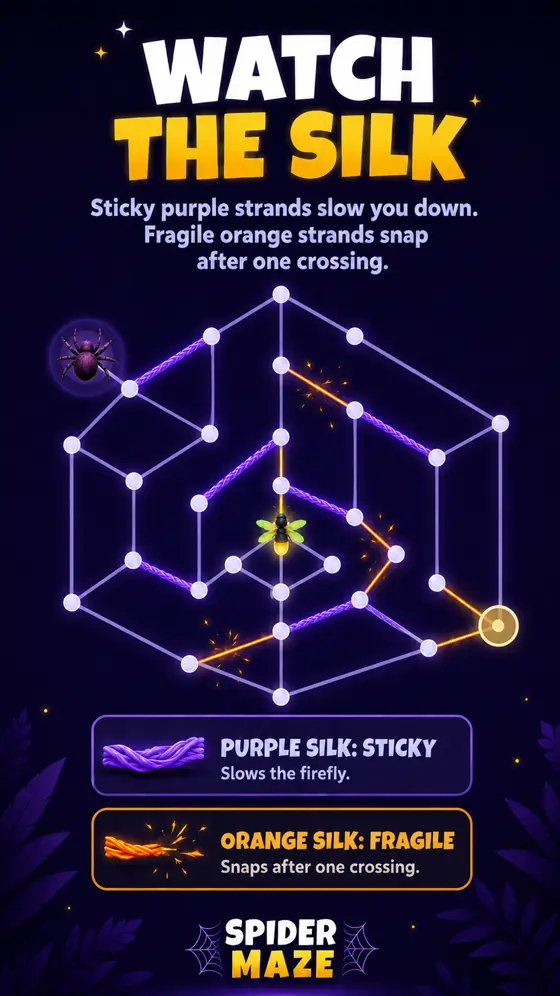
A web is not just a collection of identical lines. Colored strands change how a route behaves, and recognizing them early is essential for solving later Spider Maze puzzles.
Purple sticky silk slows the firefly
A purple strand costs precious time because sticky silk slows your movement. It may still be the right path when it creates a much shorter route, but treat it as more expensive than a normal connection. Compare the entire branch, not just the number of nodes.
Orange fragile silk snaps after crossing
An orange strand can be crossed once, then it breaks. Think of it as a one-way commitment: after using it, do not assume you can return along the same connection. Trace your path from the far side all the way to the exit before crossing.
How colored strands change route planning
- Normal silk: the baseline connection for comparing routes.
- Purple sticky silk: adds a timing cost, so protect your lead.
- Orange fragile silk: removes the return option after one crossing.
When a risky strand is still useful
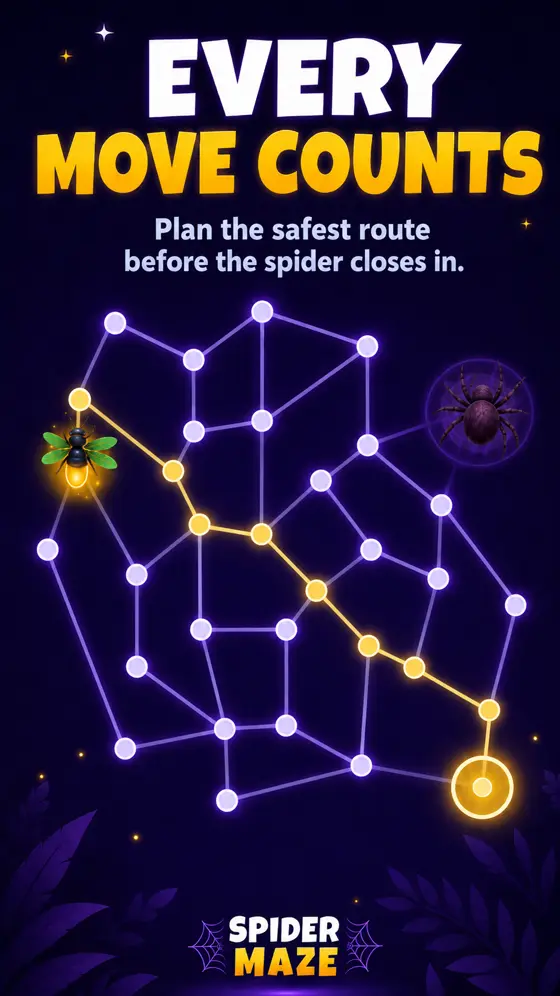
Special silk is not always a trap. A sticky shortcut can be safer than a long normal route, while a fragile strand can close a section behind you after it has served its purpose. The correct choice depends on where the spider can move and where your next safe node lies.
Check before you tap
- Identify every colored strand on the candidate route.
- Estimate the timing cost of purple silk.
- Confirm you will not need to return across orange silk.
- Keep Freeze or Undo available if the margin is narrow.
For broader route advice, continue with our nine Spider Maze tips or review when to use each power-up.