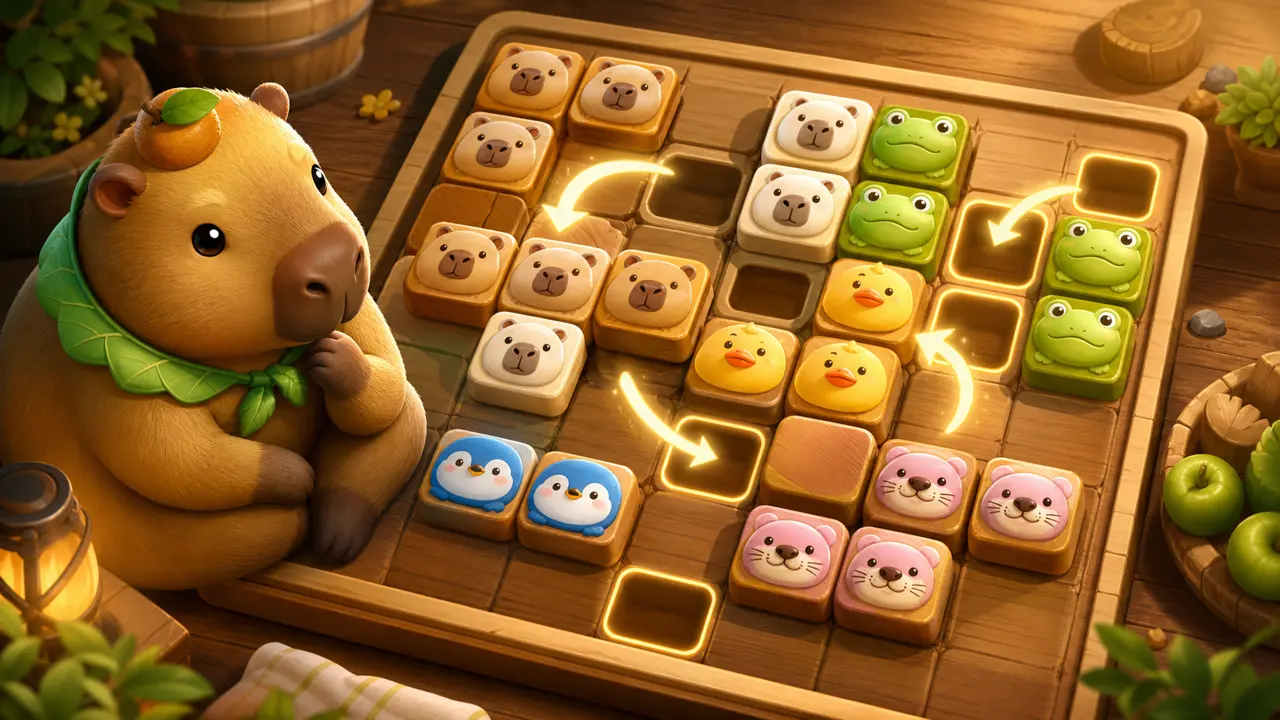
A merge game becomes difficult when the board stops giving you options. These seven habits help you preserve those options in Capybara Grow.
1. Build from one side
Choose an edge as the home for advanced animals. Keeping valuable pieces together reduces travel and leaves the center available for temporary moves.
2. Make the move after the move
Do not judge a match only by what disappears. Ask where the upgraded animal will land and whether it completes another pair. The strongest turns often produce two or three useful actions.
3. Merge low-level animals early
Common animals multiply quickly. Combine them before they occupy separate pockets, but avoid rushing a match if it blocks the only route between two larger groups.
4. Keep twins within reach
If two matching animals cannot meet, they behave like clutter. Position a new piece near its partner or keep a path open between them.
5. Protect empty cells
Empty space is a resource. A free row lets you rearrange, absorb new pieces, and recover from an awkward layout. Treat your final empty cells as carefully as your highest animal.
6. Work backward from the target
Count how many lower-tier animals are required for the goal. This reveals which pieces matter and which merges can wait. Our animal progression guide explains the discovery journey.
7. Slow down when the board is busy
Capybara Grow is designed for relaxed play. When space becomes tight, pause and compare every available match. A thoughtful move is usually faster than recovering from a blocked board.
Practice one idea at a time
Start by protecting a working corner. On the next level, focus on setting up chain reactions. Small improvements quickly become instinctive, especially after reading the beginner guide.